
Core Training for Climbers – More Body Tension, More Control on the Wall
Core training for climbers is one of the most underrated factors for long-term success on the wall. While finger strength, technique, and endurance are often the focus, a strong core determines whether you can execute movements with control—especially on steep routes, when using hooks, or during dynamic moves.
In this article, you'll learn why core training is so important for climbing, which muscles really matter, and how you can specifically improve your core strength—with simple exercises you can do at home that integrate perfectly into your climbing training.
Why is core training so important for climbing?
The core connects the upper and lower body. It ensures that force from the arms is efficiently transferred through the torso to the feet. Without sufficient core engagement, climbers quickly lose control—especially on overhangs, small footholds, or complex movement sequences.
A well-trained core helps you:
maintain more body tension on steep routes
Apply pressure to your feet more precisely and stay on the steps longer
to absorb dynamic forces smoothly
To save energy and recover more quickly
In short: Core training makes you more efficient, more stable, and technically more precise.
Which muscles are essential for core training for climbers?
Core training is more than just traditional abdominal exercises. For climbers, a holistic approach is essential. A functional core includes:
Straight and oblique abdominal muscles—for stability and rotation
Deep Abdominal Muscle (Transversus Abdominis) – For Stability
Lower Back – For Balance and Control
Hip Flexors & Glutes – Essential for Hooks and High Steps
The better these muscle groups work together, the more stable your movements will be on the wall, and the better you'll be able to control your moves instead of just hoping you'll barely make it to the next hold.
Core Training Off the Wall – Targeted and Effective
Climbing itself works your core, but often not evenly or in a targeted way. Supplementary core training away from the wall helps you address weaknesses and make targeted progress.
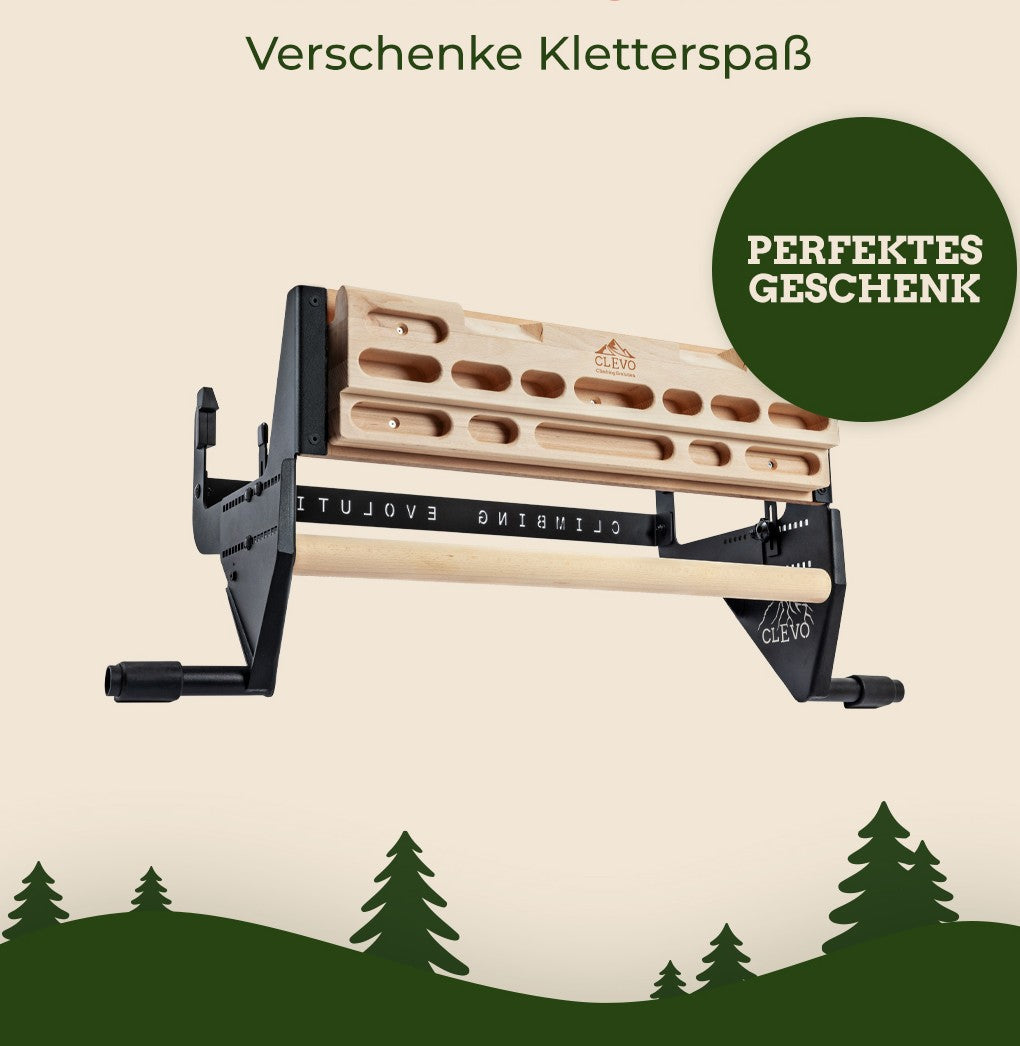
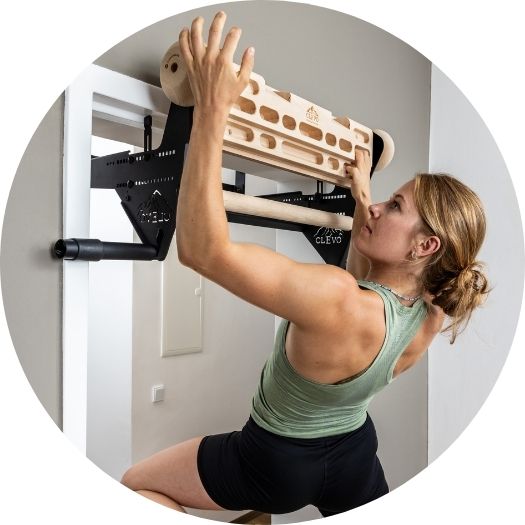
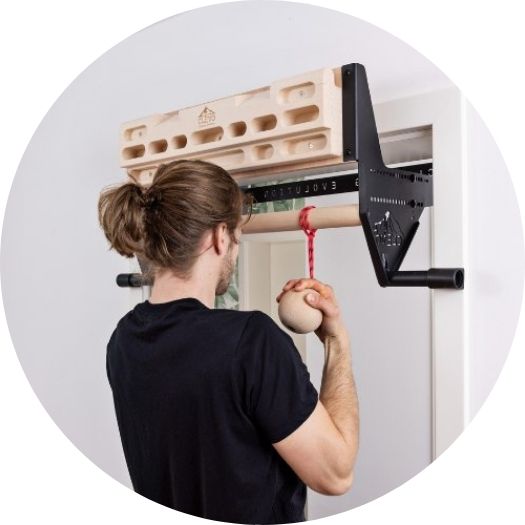
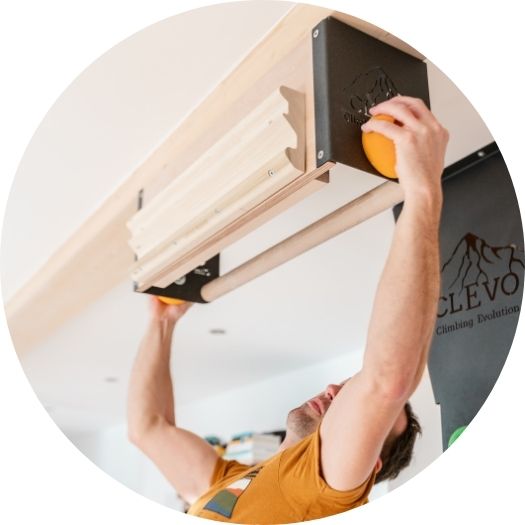
A particularly effective tool for this is the CLEVO Door Module. It can be mounted on the door frame without drilling and provides a stable base for knee raises, windshield wipers, or toes-to-bar. These exercises combine core strength and grip strength and are extremely specific to climbing—ideal for anyone who wants to train efficiently at home.

Clevo Door Training Module
Effective Core Exercises for Climbers
Hanging Leg Raises / Knee Raises
One of the best exercises for core stability. The free-hanging position forces the core to work to maintain stability—perfect, for example, on the CLEVO Door Module
Windshield Wipers
The exercise that makes your obliques burn. Rotation helps you maintain better stability during twisting movements and move more freely against the wall.
Planks & Side Planks
—classic exercises for core strength and stability. Ideal as a warm-up or to wrap up a climbing session.
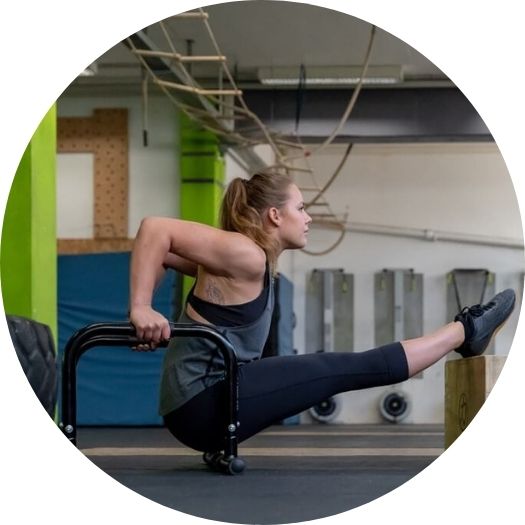
Dead Bug & Hollow Body Holds
Promote core control and coordination—especially important for technically challenging boulders.
Core Training with Resistance Bands
Resistance bands are versatile and perfect for controlled rotation and anti-rotation exercises. They’re excellent for core activation, warm-ups, or rehab sessions and can be easily integrated into any climbing workout—at home, in the gym, or on the go.

Pull-Up & Dip Resistance Bands
Follow-Along Training:
If you want to start training your core, check out our 11-minute core workout video:
How often should climbers do core training?
You don't need a separate core workout that lasts an hour. Just 2–3 short sessions per week, each lasting 10–15 minutes, are enough to make measurable progress (before or after your workout).
Tips for lasting results:
Quality over quantity
Precise execution and controlled tension
Progression through longer holds or more challenging variations
Conclusion: Core training is a game-changer for climbers
A strong core is the foundation for better technique, more control, and more efficient climbing. Whether you’re bouldering or rope climbing, if you work specifically on your core stability, you’ll climb more steadily, conserve more energy, and maintain your performance over the long term.
With simple exercises, the right equipment—such as the CLEVO Door Module - and versatile tools like resistance bands, core training can be easily integrated into your daily routine—and pay off immediately on the wall.
Train smart. Stay strong. Climb better